
WELCOME BONUS 200%
UP TO €1500 + 200
FREE SPINS
UP TO €1500 + 200
FREE SPINS
Home → Blackjack
Blackjack at Casino Ripper: Variants, Rules and Payouts
Step-by-step Split at the Live Table
Lightning Blackjack by Evolution allows stakes from 1 to 2,500 EUR with unlimited players joining the virtual seat. The game features lightning multipliers up to 25x on winning hands, which directly impact the potential payout size for each split decision made during the round. Players must evaluate whether doubling down after a split is viable given these random multipliers that can drastically alter the final return on investment.
Quantum Blackjack Plus Live by Playtech offers stakes between 1 and 5,000 EUR with quantum multipliers reaching 1,000x on three-card combinations totaling 21 points. This high-variance environment means that splitting pairs requires careful consideration of the potential for massive payouts versus the risk of losing the doubled stake immediately. The maximum win cap is effectively undefined due to the extreme multiplier range available on specific card combinations.
Blackjack Party by Evolution sets stakes from 1.00 to 1,000 EUR with two moderators creating a lively atmosphere around the table. While the social aspect is prominent, the core mechanics remain standard where splitting pairs doubles the initial wager but also splits the probability of winning against the dealer. Players should note that this variant lacks the extreme multipliers found in other live titles, focusing instead on consistent gameplay flow.
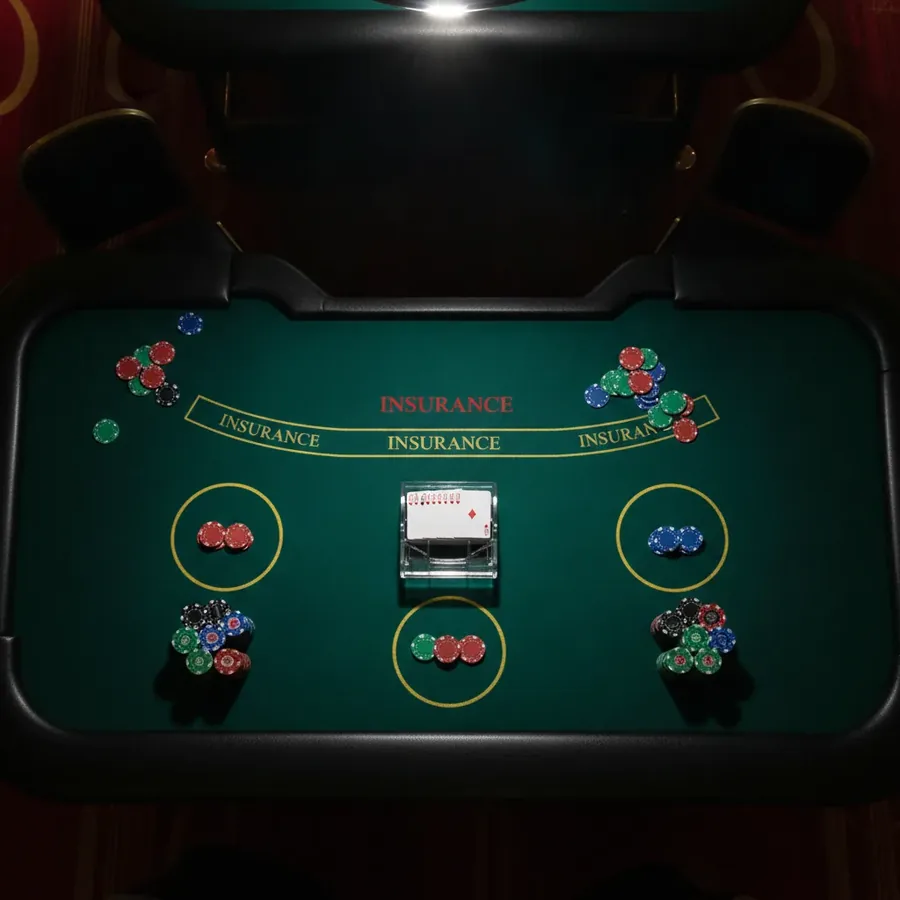
What Push Means: Stake Returns to You
A push occurs when the player hand equals the dealer hand, resulting in the original stake being returned without any winnings or losses. In standard blackjack rules like those found in the 6-deck version with S17, this outcome happens frequently enough to affect the overall house edge calculation over time. The player retains their capital, allowing them to continue playing without depleting their bankroll from that specific hand's result.
When insurance is offered because the dealer shows an ace, taking it creates a separate side bet paying 2:1 if the dealer has blackjack. If the dealer does not have blackjack, the insurance bet loses while the main hand might push or win, complicating the net settlement. Basis strategy always recommends rejecting insurance unless counting cards, as its theoretical return is significantly lower than the main game's average yield.
In the context of the liberal Vegas Strip rules with a 0.28% house edge, pushes are accounted for in the long-term statistical model. The standard deviation of 1.15 indicates moderate volatility, meaning pushes help stabilize short-term results against larger swings caused by blackjacks or busts. Players relying on basic strategy will see their bankroll fluctuate less dramatically due to these neutral outcomes compared to aggressive betting systems.
RNG draws cards from virtual eight-deck shoe
The virtual eight-deck shoe contains 416 cards, which increases the house advantage compared to single-deck games by approximately 0.48 percentage points. This higher deck count reduces the effectiveness of card counting strategies and lowers the frequency of natural blackjacks for both the player and the dealer. Consequently, the theoretical return to player drops slightly, making precise basic strategy application even more critical for maintaining optimal expected value.
Single-deck games typically offer a superior 0.15% house edge due to fewer cards remaining in the shoe after burns and deals. However, many casinos compensate for this advantage by altering payout structures, such as reducing the blackjack payout from 3:2 to 6:5. This rule change adds 1.39 percentage points to the house edge, effectively negating the benefit gained from using fewer decks in circulation.
The six-deck variant with S17, DAS, and DOA rules provides a balanced approach with a 0.46% house edge and 99.54% RTP. Players utilizing perfect basic strategy can achieve this return rate, but deviations significantly increase the casino's advantage over thousands of hands. The continuous shuffling or frequent reshuffling mechanisms often associated with digital shoes further ensure that card tracking remains ineffective for most participants.
What Peek Means with a Dealer Ace
Peeking refers to the dealer checking their hole card for a ten-value card when showing an ace to determine if they have a natural blackjack. This procedure protects the player from losing their entire stake plus insurance if the dealer indeed holds blackjack, ensuring fair settlement procedures. Late surrender is only permitted after this peek confirms the dealer does not have a natural blackjack, affecting the timing of player decisions.
Early surrender allows players to forfeit half their bet before the dealer checks for blackjack, offering a greater advantage of up to 0.6 percentage points. Since early surrender is extremely rare in modern online platforms, most games rely on late surrender which improves RTP by only about 0.08 percentage points. Players must weigh this modest improvement against the stricter conditions required to exercise this option during the dealing phase.
Insurance bets pay 2:1 if the dealer has blackjack, but the house edge stands at 7.47% for six to eight deck games. This high disadvantage makes insurance a poor choice for most players unless they are skilled card counters tracking a true count of +3 or higher. The peek mechanism ensures that insurance wagers are settled immediately upon dealer confirmation, separating them from the main hand outcome completely.
Even Money only possible with Dealer Ace
Even money is a simplified way to take insurance on a player blackjack when the dealer shows an ace, guaranteeing a 1:1 payout regardless of the dealer's hole card. This option eliminates the risk of a push if the dealer also has blackjack, converting the 3:2 win into a guaranteed fixed amount. It is mathematically equivalent to taking insurance on a natural blackjack hand under standard odds calculations.
The standard blackjack payout is 3:2, meaning a 100 EUR bet yields 150 EUR in winnings plus the original stake return. When even money is taken, the player receives 1.5 times the bet immediately, avoiding the uncertainty of the dealer's hidden card. This certainty comes at the cost of potentially missing out on a larger payout if the dealer does not complete a blackjack.
Comparing the two scenarios, taking even money locks in the 3:2 profit while declining insurance leaves the outcome open to chance. If the dealer has blackjack, the main hand pushes and insurance wins, resulting in the same net gain as even money. If the dealer does not have blackjack, the player keeps the full 3:2 profit minus the lost insurance premium, highlighting the strategic trade-off involved.
Blackjack variants at a glance
| Variant | Payout | House edge | Rule | Bet range |
|---|---|---|---|---|
| Blackjack 6 Decks, S17, DAS, DOA, Auszahlung 3:2, Basisstrategie | 99.54% | 0.46% | Dealer steht auf Soft 17; Verdopplung auf jeder Zweierkarte; Verdopplung nach Split erlaubt; keine Aufgabe. Basisstrategie ist für diesen Wert zwingend | Blackjack 3:2, normaler Gewinn 1:1, Insurance 2:1 |
| Blackjack Surrender (Late Surrender) – Regel-Effekt | n.a. (Regel-Modifikator) | −0.08 Prozentpunkte | Spieler gibt Hand nach Dealer-Blackjack-Prüfung auf, verliert die Hälfte des Einsatzes. Verbessert RTP um ca. 0.08 Prozentpunkte. Early Surrender ist wesentlich wertvoller (bis −0.6 Prozentpunkte), aber extrem selten. | Rückzahlung 50% des Einsatzes |
| Blackjack Liberal Vegas Strip (liberale Regeln, 3:2) | 99.72% | 0.28% | Günstigste Regelkombination: S17 + DAS + Resplit + Late Surrender. Standardabweichung 1,15 | Blackjack 3:2, Gewinn 1:1 |
| Blackjack Insurance / Versicherung (6–8 Decks) | 92.53% | 7.47% | Separate Nebenwette bis 50% der Hauptwette, wenn der Dealer ein Ass hat. Basisstrategie schreibt IMMER Ablehnung vor (außer Karten zählen bei True Count ≥ +3). Bei einem Deck Vorteil ≈ 5.88% | Insurance 2:1 |
| Blackjack Ein Deck, klassische Regeln, 3:2 | 99.85% | 0.15% | Weniger Decks = niedrigerer Vorteil; ein Deck gibt ca. −0.48 Prozentpunkte gegenüber 8 Decks. Oft durch 6:5 Auszahlung kompensiert. | Blackjack 3:2, Gewinn 1:1 |
| Blackjack Split / Double / H17 – Regel-Effekte | n.a. (Regel-Modifikatoren) | H17 +0.22 Prozentpunkte; RSA −0.08 Prozentpunkte; DAS −0.14 Prozentpunkte | Dealer Hits Soft 17 verschlechtert RTP um 0.22 Prozentpunkte; Resplit Aces verbessert um 0.08 Prozentpunkte; Double After Split verbessert um ca. 0.14 Prozentpunkte; 6 Decks statt 8 – ca. 0.02 Prozentpunkte. | Double – Einsatz ×2 mit einer Karte; Split – bis 4 Hände; Ass-Split meist mit einer Karte. |
Perfect Pairs vs 21+3 in House Edge
The house edge for Perfect Pairs side bets typically ranges from 5.0% to 9.0%, depending on the specific payout structure offered by the table rules. This figure represents a significant cost compared to the base game RTP, which often sits around 99.54% under liberal Vegas Strip conditions. Consequently, players wagering 10 EUR per hand lose approximately 0.50 EUR to the house on average with each pair bet placed. This statistical disadvantage makes the side bet a poor choice for bankroll preservation over extended sessions.
Lightning Blackjack offers multipliers up to 25x on winning hands, but the underlying house edge remains substantial due to the volatile nature of the bonus payouts. The RTP for this Evolution title is listed at 99.56%, which appears high but masks the true cost of the lightning features during play. A player betting 5 EUR per round faces an expected loss of roughly 0.028 EUR per spin before any multiplier hits. This means the bonus feature does not compensate for the inherent mathematical advantage held by the casino in the long run.
Quantum Blackjack Plus Live provides multipliers up to 1,000x on three-card combinations totaling 21 points, yet the base game RTP stands at 99.57%. This percentage indicates that for every 100 EUR wagered, the casino retains 0.43 EUR on average across millions of hands played. Players engaging with Playtech software must accept this edge as it applies to both the main game and the quantum bonus triggers. The high variance of these multipliers creates large swings but does not alter the fundamental negative expectation of the side bets.
Register Late Surrender correctly in three steps
The first step involves identifying tables that offer Late Surrender, a rule that improves the player's RTP by approximately 0.08 percentage points. This benefit is smaller than Early Surrender, which can reduce the house edge by up to 0.60 percentage points, but it is more commonly available. Players should verify this rule in the game settings before placing any chips, as missing this option costs them valuable equity. Without this rule, the house edge increases significantly, especially in games using six decks instead of eight.
Once the correct table is selected, the second step requires waiting until the dealer checks for blackjack after the initial two cards are dealt. This timing is crucial because Early Surrender allows players to quit before the dealer inspection, whereas Late Surrender only permits action if the dealer does not have a natural. If the dealer holds an Ace or Ten showing, they will check their hole card before surrender options open to all participants. Acting too early results in a forfeited hand rather than a half-loss refund.
The final step consists of clicking the surrender button to receive a 50% refund of the original wager when holding a weak hand against a strong dealer upcard. This action effectively reduces the loss from 100% of the stake to just 50%, preserving half the bankroll for future rounds. For example, surrendering a 16 against a dealer Ace saves 5 EUR on a 10 EUR bet instead of losing the entire amount. This strategic move is essential for minimizing losses in high-variance scenarios where hitting or standing yields poor odds.
Insurance Pays 2:1 Yet Still Costs Money
Insurance is a side bet paying 2:1 if the dealer has a blackjack, but its house edge is a steep 7.47% for standard six to eight deck games. This figure is drastically higher than the main game RTP of 99.54%, making insurance a mathematically unsound decision for most players. Basis strategy dictates always declining this bet unless one is counting cards and the true count reaches +3 or higher. Accepting insurance without card counting erodes the bankroll much faster than playing the main hand alone.
In single-deck games, the insurance house edge drops slightly to approximately 5.88%, which is still far worse than the base game advantage of 0.15%. Even with this reduced edge, the expected value remains negative, meaning players lose money over time by taking the insurance offer. A 10 EUR insurance bet costs the player about 0.59 EUR on average per occurrence due to this built-in house margin. This cost accumulates rapidly during sessions where the dealer frequently shows an Ace as their upcard.
The maximum allowable insurance wager is capped at 50% of the original main bet, limiting the potential exposure on any single hand outcome. While the 2:1 payout seems attractive, the probability of the dealer having a ten-value hole card is only four in thirteen. This ratio ensures that the casino retains a significant portion of the insurance wagers placed by uninformed players. Refusing insurance preserves the original 0.46% house edge of the main game, protecting the player's long-term profitability.
Chose Wrong Table for 5 EUR Bankroll
Selecting Lightning Blackjack with a 5 EUR bankroll is risky because the minimum bet starts at 1 EUR, allowing only five total hands per session. Each hand carries a house edge that, combined with the volatility of the lightning multipliers, can deplete the entire balance in minutes. The RTP of 99.56% suggests small losses, but the variance ensures that a few unlucky rounds will exhaust the funds quickly. Players need a larger buffer to withstand the inevitable downswings associated with high-variance live dealer titles.
Blackjack Party offers a minimum bet of 1.00 EUR, providing slightly more endurance with a 5 EUR stack than higher-limit tables might allow. However, the party atmosphere and dual moderators do not improve the underlying mathematics, which remain unfavorable for small bankrolls. The game uses standard rules, so the house edge stays consistent regardless of the entertaining presentation provided by the hosts. A player might survive longer here, but the expected loss rate remains unchanged over time.
Quantum Blackjack Plus Live has a minimum stake of 1 EUR, but the presence of massive multipliers up to 1,000x tempts players into reckless betting patterns. With only 5 EUR, a single bad beat or a series of non-winning quantum triggers will wipe out the account entirely. The RTP of 99.57% is misleading for short sessions, as the variance dominates the experience when capital is scarce. It is advisable to avoid such volatile games until the bankroll can support at least fifty minimum bets.
Which table limits suit 20 EUR balance?
Standard Blackjack tables with a 5 EUR minimum limit are unsuitable for a 20 EUR balance, as this allows only four hands before bankruptcy. Even with optimal basic strategy reducing the house edge to 0.46%, the risk of ruin is excessively high for such a small stake. Players should seek tables with lower minimums, such as those starting at 1 EUR, to extend their playing time and manage variance better. A 20 EUR bankroll requires at least twenty minimum bets to statistically survive typical downswings in a fair game.
Lightning Blackjack accepts bets from 1 EUR, making it technically playable with a 20 EUR balance, though the volatility remains a concern. The lightning multipliers can produce quick wins, but they also accelerate the depletion of funds during losing streaks. The RTP of 99.56% is decent, but the high variance means a 20 EUR stack is fragile against random outcomes. Players should treat this as entertainment rather than a serious profit opportunity given the limited capital available.
Quantum Blackjack Plus Live allows 1 EUR wagers, offering twenty hands with a 20 EUR balance, which is the minimum required for reasonable play duration. The quantum multipliers add excitement but do not change the fundamental requirement for sufficient bankroll management. Since the game contributes 10% to bonus wagering requirements, small stakes are inefficient for clearing promotional offers. It is better to use slots for bonus clearance while using low-limit blackjack tables for steady, low-variance play.
Double Down after Split: which tables allow it
The Blackjack Liberal Vegas Strip variant permits Double After Split, a rule that reduces the house edge by 0.14 percentage points compared to restricted tables. This specific liberal configuration includes Soft 17 standing and Late Surrender, creating one of the most favorable mathematical environments for players seeking lower costs. Consequently, bettors can double their initial wager on split hands without surrendering the strategic advantage provided by the reduced house edge.
Evolution's Lightning Blackjack operates with a different set of constraints, allowing unlimited players to engage with multipliers up to 25x on winning hands. While the RTP stands at 99.56%, the game focuses on volatile payouts rather than traditional rule variations like DAS. Players must accept that the lightning features override standard strategic depth, shifting the focus from mathematical optimization to high-risk multiplier hunting.
Playtech Quantum Blackjack Plus Live offers multipliers up to 1,000x on three-card combinations totaling 21 points, maintaining an RTP of 99.57% under optimal strategy. The betting range spans from 1 EUR to 5,000 EUR, accommodating high rollers who seek substantial returns on specific card combinations. This structure prioritizes explosive wins over consistent small gains, altering the expected value calculation for every hand dealt during the session.
Splitting Eights vs Standing on 16
Standard basic strategy mandates splitting eights instead of standing on a hard sixteen, as the latter yields a significantly higher probability of losing the entire stake. This fundamental decision is rooted in the statistical reality that starting two new hands with four cards offers better long-term recovery potential than playing a weak sixteen. Adhering to this rule is essential for minimizing the impact of the house edge across thousands of hands played at the table.
The Blackjack Liberal Vegas Strip variant achieves a house edge of only 0.28% when players follow these optimal splitting and doubling rules precisely. Any deviation, such as standing on eight-eight, immediately increases the casino's advantage and erodes the theoretical return rate established by the game design. Maintaining discipline ensures the player benefits from the 3:2 blackjack payout and the favorable S17 dealer standing rule throughout the session.
Contrast this with the 6-deck game offering 6:5 blackjack payouts, where the house edge jumps to 1.85% due to inferior compensation rules. In such scenarios, even perfect splitting strategies cannot overcome the structural disadvantage imposed by the reduced payout ratio on natural blackjacks. Players facing these terms must adjust their bankroll expectations downward, as the mathematical foundation for positive expected value has been fundamentally compromised.
Which hands are excluded from Surrender?
Late Surrender allows players to forfeit half their bet only after the dealer checks for blackjack, excluding hands where the dealer holds an ace or ten initially. This timing restriction protects the casino from players abandoning strong positions prematurely, ensuring the house retains its edge on initial deal outcomes. The rule improves the player's RTP by approximately 0.08 percentage points, providing a modest but valuable reduction in long-term losses.
Early Surrender is significantly more valuable, potentially reducing the house edge by up to 0.6 percentage points, yet it remains extremely rare in modern online casinos. Most platforms restrict surrender options to late execution, meaning players cannot quit before discovering if the dealer has a natural twenty-one. This limitation forces bettors to play out all hands, increasing exposure to variance and potentially higher total losses over extended sessions.
The Blackjack Party table by Evolution emphasizes entertainment with two moderators, lacking explicit surrender mechanics in its standard live dealer format. Without a surrender option, players must rely entirely on hitting or standing decisions, which may lead to busting more frequently against strong dealer up-cards. This absence of escape valves requires stricter adherence to basic strategy charts to mitigate the increased risk associated with forced play-throughs.
How much time is left for the decision?
Live dealer games like Lightning Blackjack impose strict time limits for player actions, typically ranging between fifteen and thirty seconds per decision cycle. These constraints prevent deliberation and force rapid choices, which often leads to deviations from optimal basic strategy among casual participants. The pressure accelerates the pace of play, increasing the number of hands processed per hour and consequently raising the total amount wagered.
Quantum Blackjack Plus Live by Playtech integrates quantum multipliers that activate randomly, requiring players to maintain focus on both strategic moves and potential bonus triggers. The interface displays clear countdown timers to ensure fair dealing procedures while managing the high-stakes environment of bets up to 5,000 EUR. Missing these deadlines results in automatic folds or passive plays, effectively surrendering any potential advantage the player might have calculated.
Standard web-based variants offer more generous timer settings, allowing users ample time to consult strategy charts without risking penalty folds or automated errors. This flexibility supports disciplined play, enabling bettors to execute complex splits and doubles with confidence in the accuracy of their mathematical approach. The relaxed pace contrasts sharply with live studio productions, favoring those who prioritize precision over speed in their gaming sessions.
When can you increase your bet?
Betting limits at Lightning Blackjack start at 1 EUR and extend up to 2,500 EUR, allowing significant flexibility for bankroll management and progressive staking strategies. Players can increase wagers after wins or reset them after losses, utilizing the wide range to accommodate varying risk appetites during the session. This structure supports martingale systems, though the table maximums ultimately cap the recovery potential for losing streaks regardless of the progression used.
Playtech's Quantum Blackjack Plus Live expands the upper limit to 5,000 EUR, catering to high rollers seeking massive payouts from quantum multipliers reaching 1,000x. Such elevated stakes require substantial reserves to withstand variance, as a single unlucky run can deplete funds faster than at lower-limit tables. The capacity to raise bets significantly enhances the thrill but demands rigorous discipline to prevent emotional chasing during downturns.
Bonus wagering contributions differ substantially between game types, with table games like blackjack contributing only 10% toward the 300% welcome bonus turnover requirement. Increasing bets on these tables is inefficient for clearing bonuses, as the required turnover accumulates slowly relative to the action taken. Players should prioritize slots for wagering completion, reserving blackjack for pure gameplay rather than bonus utilization to maximize overall value extraction.
Contact
Live - online chat
Banking









Providers












ripper casino 2025